Wisconsin's 25 charter school entities have a weighted chronic absenteeism rate of 30.6%, nearly double the 16.9% rate for the state's 421 traditional school districts. The gap has grown substantially since before the pandemic, when charters were at 19.7% compared to 12.7% for traditional districts, a 7.0-point difference that has expanded to 13.7 points.
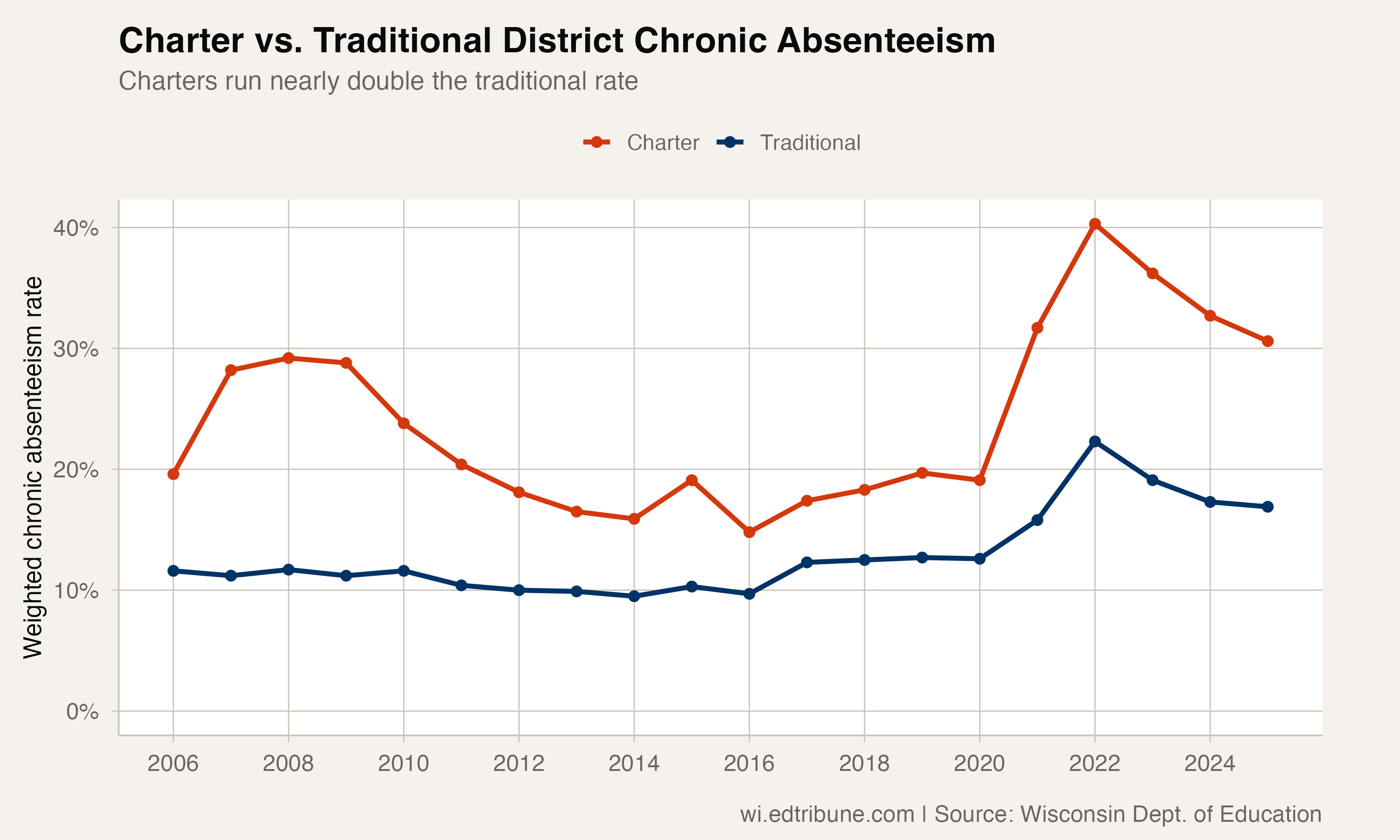
The disparity is even more pronounced when measured by median rather than weighted average. The median charter entity has a 34.4% chronic rate, compared to a 10.6% median for traditional districts, a 3.2x ratio.
Context Before Conclusions
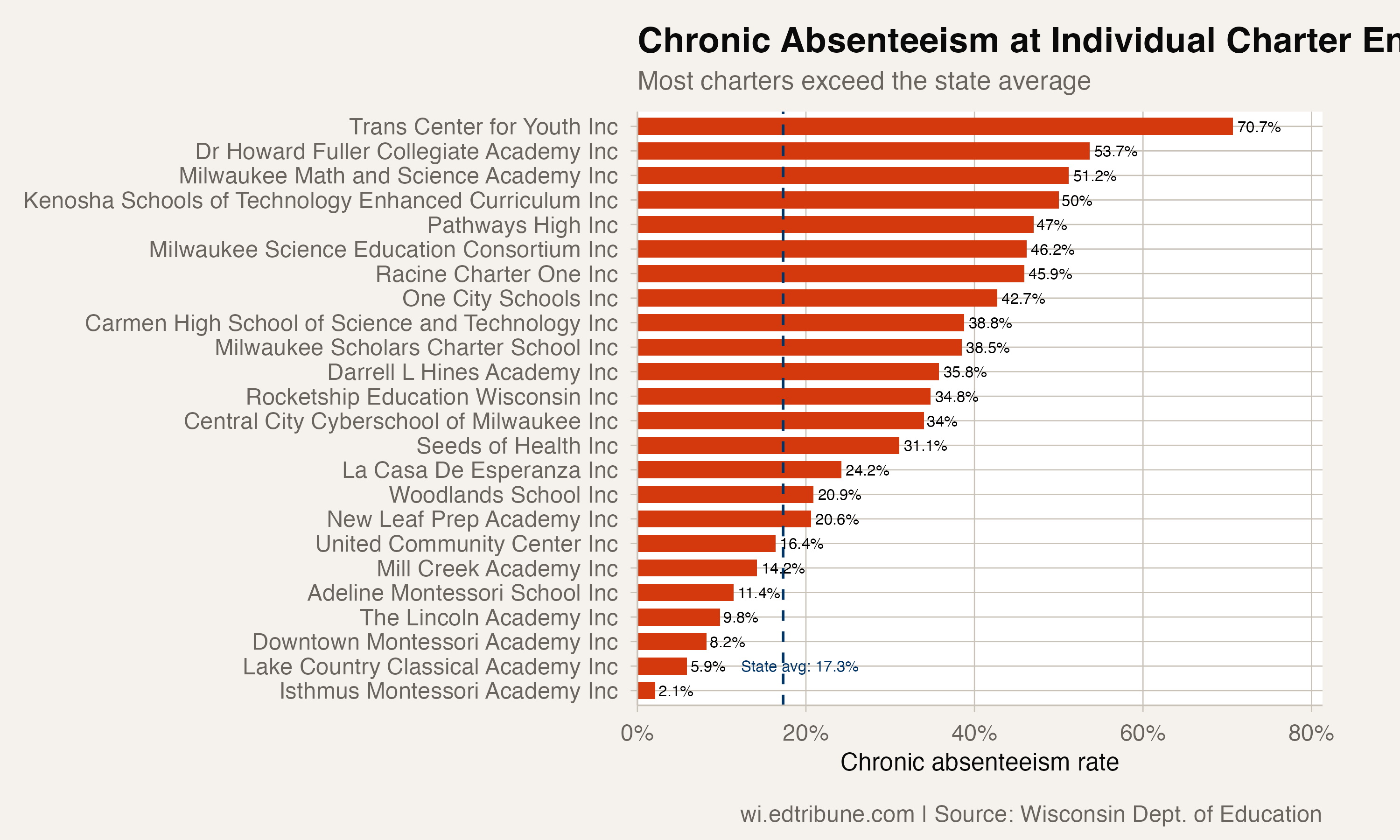
The raw comparison demands context. Wisconsin's charter sector is small: 25 entities enrolling roughly 10,948 students in 2025, less than 1.5% of statewide enrollment. Many of these charters specifically serve students who struggled in traditional schools, including students with attendance problems, behavioral challenges, or academic gaps that traditional districts could not address.
Dr. Howard Fuller Collegiate Academy, for example, operates in Milwaukee and serves 557 students with a 53.7% chronic rate. Milwaukee Science Education Consortium, also Milwaukee-based, has a 46.2% rate. These schools are not failing at attendance because they are charters; they are charters because they were designed to serve the students most likely to be chronically absent.
The Gap Is Still Widening
Even with that context, the trajectory is concerning. The charter-traditional gap was 7.0 points in 2019. By 2025, it is 13.7 points, nearly double.
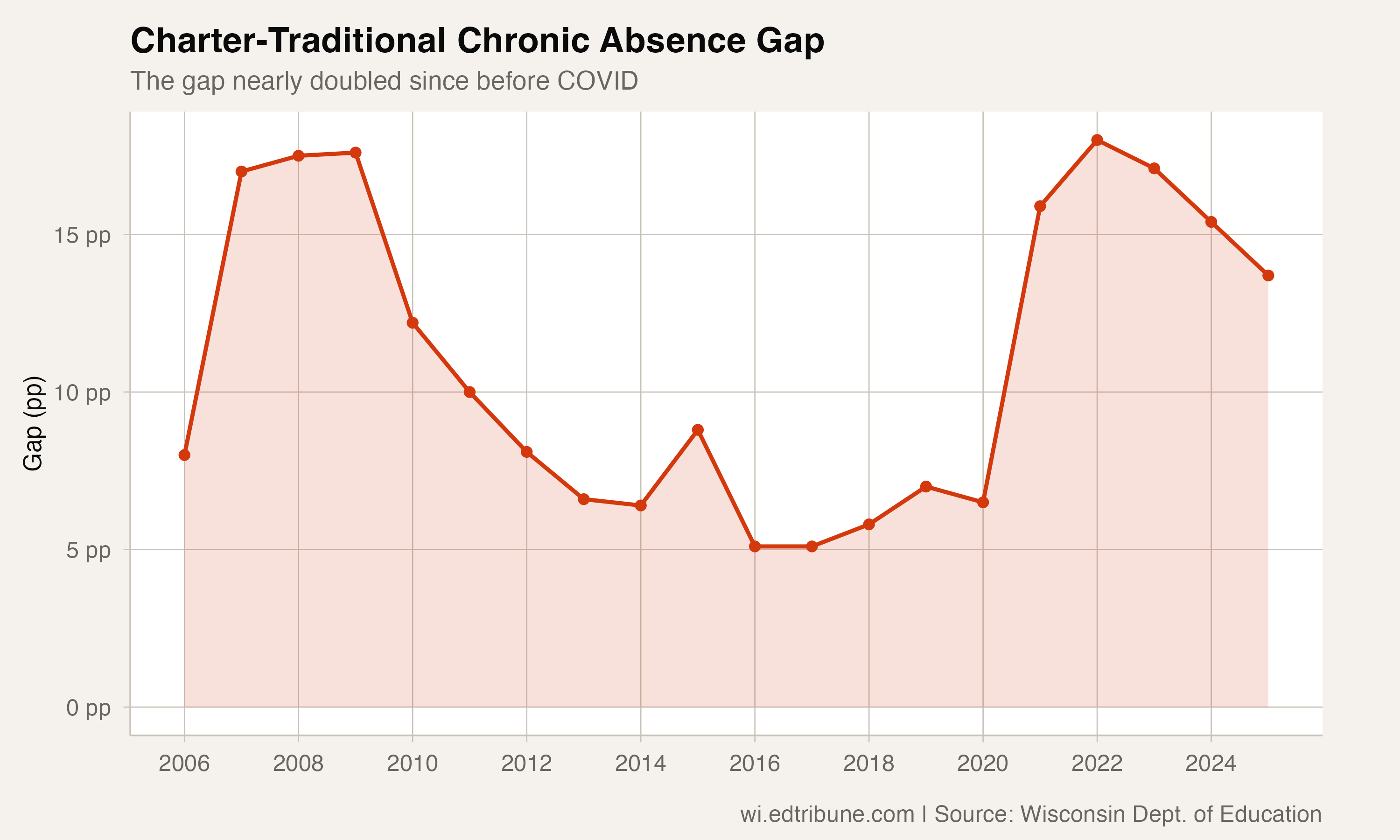
This widening suggests that whatever attendance challenges charter schools face, COVID made them worse at a faster rate than traditional districts. Charter schools' smaller size and closer community connections, often cited as advantages, may not have buffered against the pandemic's attendance disruption.
Alternatively, the widening gap may reflect composition effects: as traditional districts improved, students who remained chronically absent may have been more likely to transfer to charter alternatives, concentrating absence in the charter sector.
What the Comparison Does and Does Not Tell Us
The charter-traditional comparison in Wisconsin is fundamentally different from the same comparison in states like Arizona or Florida, where charter sectors are large enough to function as genuine alternatives to the traditional system. Wisconsin's 25 charter entities are too small and too concentrated in Milwaukee to represent a systemic alternative.
What the data does show is that chronic absenteeism is most severe in schools designed to serve students facing the highest barriers, whether those schools are traditional or charter. The highest-absence traditional districts (Milwaukee at 46.2%, Beloit at 42.7%) have rates comparable to the highest-absence charters. The common factor is not governance structure; it is the demographics and challenges of the students being served.
The sector comparison is less about charter schools themselves than a reminder that chronic absence concentrates where poverty, instability, and disengagement concentrate, regardless of what name is on the building.
Detailed code that reproduces the analysis and figures in this article is available exclusively to EdTribune subscribers.
Discussion
Sign in to join the discussion.
Loading comments...