Correction (July 23, 2026): An earlier version said the 2025 Native American absence gap was the widest in the dataset. The gap peaked at 22.3 points in 2024, just above the 21.6 points in 2025.
In the 2024-25 school year, about three in five Native American students in Wisconsin were in class regularly enough to stay on track. The other 38.9% missed more than 10% of school days, the state's threshold for chronic absenteeism. That rate is more than double the statewide average of 17.3%, and the gap has been widening since before COVID.
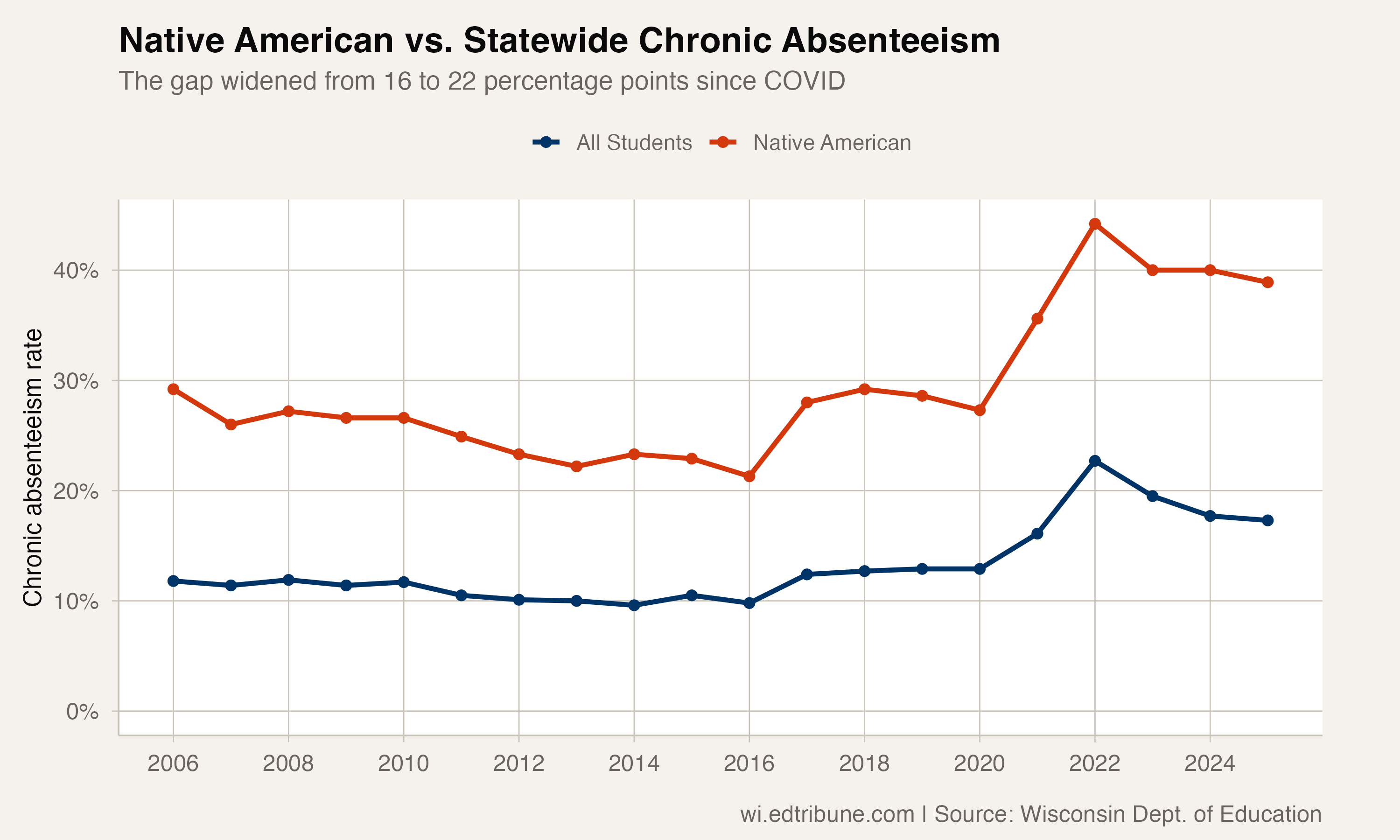
In 2019, the gap between students who are Native American and the overall state rate was 15.7 percentage points. By 2025, it had expanded to 21.6 points. The pandemic did not create this disparity, but it accelerated it in ways that three years of recovery have not yet reversed.
The Reservation Districts
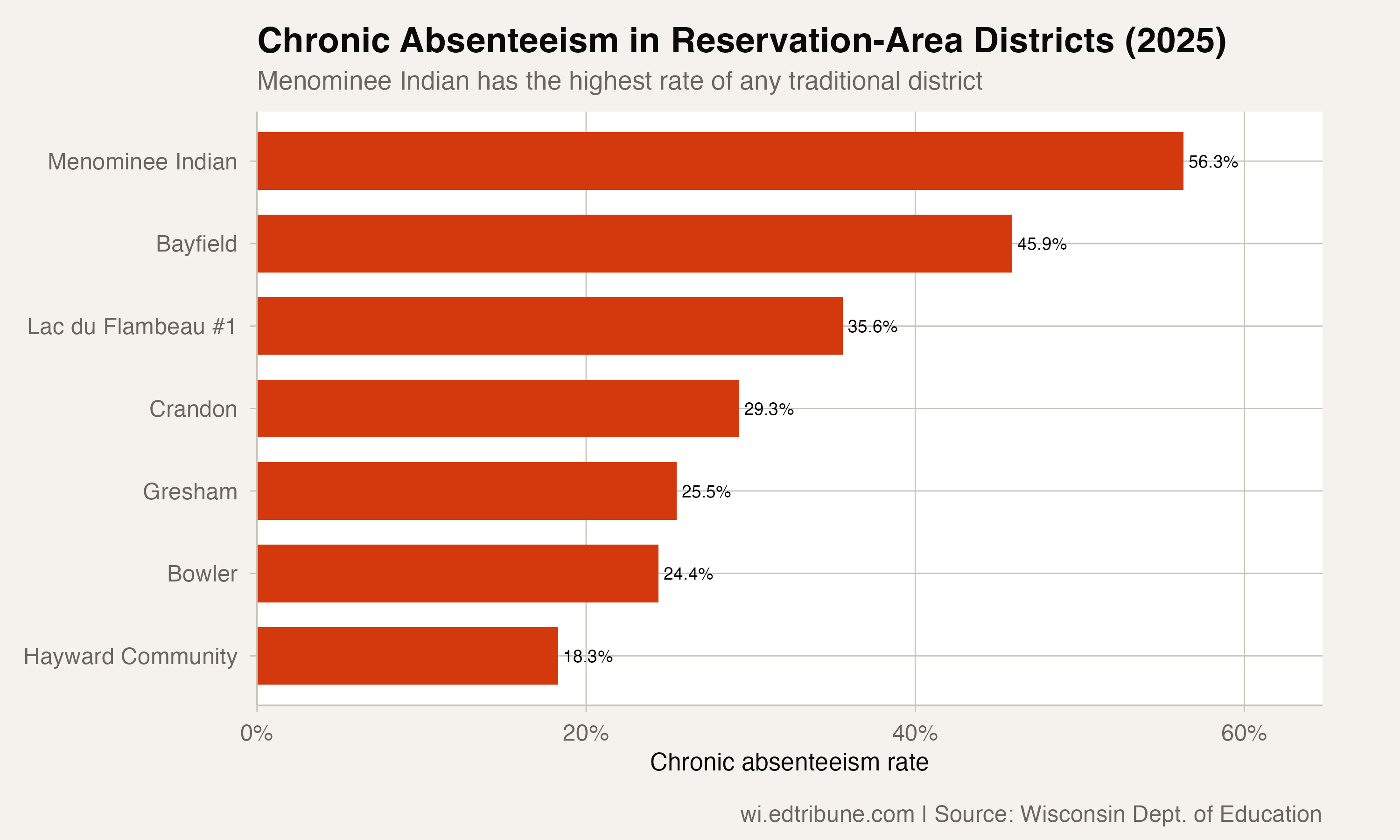
The statewide rate tells only part of the story. In reservation-area districts, where Native American students are concentrated, chronic absenteeism reaches levels that change what daily attendance looks like for whole communities.
Menominee Indian School District↗ET, the only district in Wisconsin located entirely within a reservation, has a 56.3% chronic absence rate among its 1,002 students. Lac du Flambeau #1↗ET, another reservation-area district, runs at 35.6%. Bayfield↗ET, which serves the Red Cliff Band of Lake Superior Chippewa, is at 45.9%.
The numbers reflect structural conditions that attendance interventions alone cannot address: rural isolation that makes transportation a daily challenge, intergenerational trauma rooted in the boarding school era, poverty rates well above state averages, and limited access to mental health services.
Where Native American Students Stand Among Peers
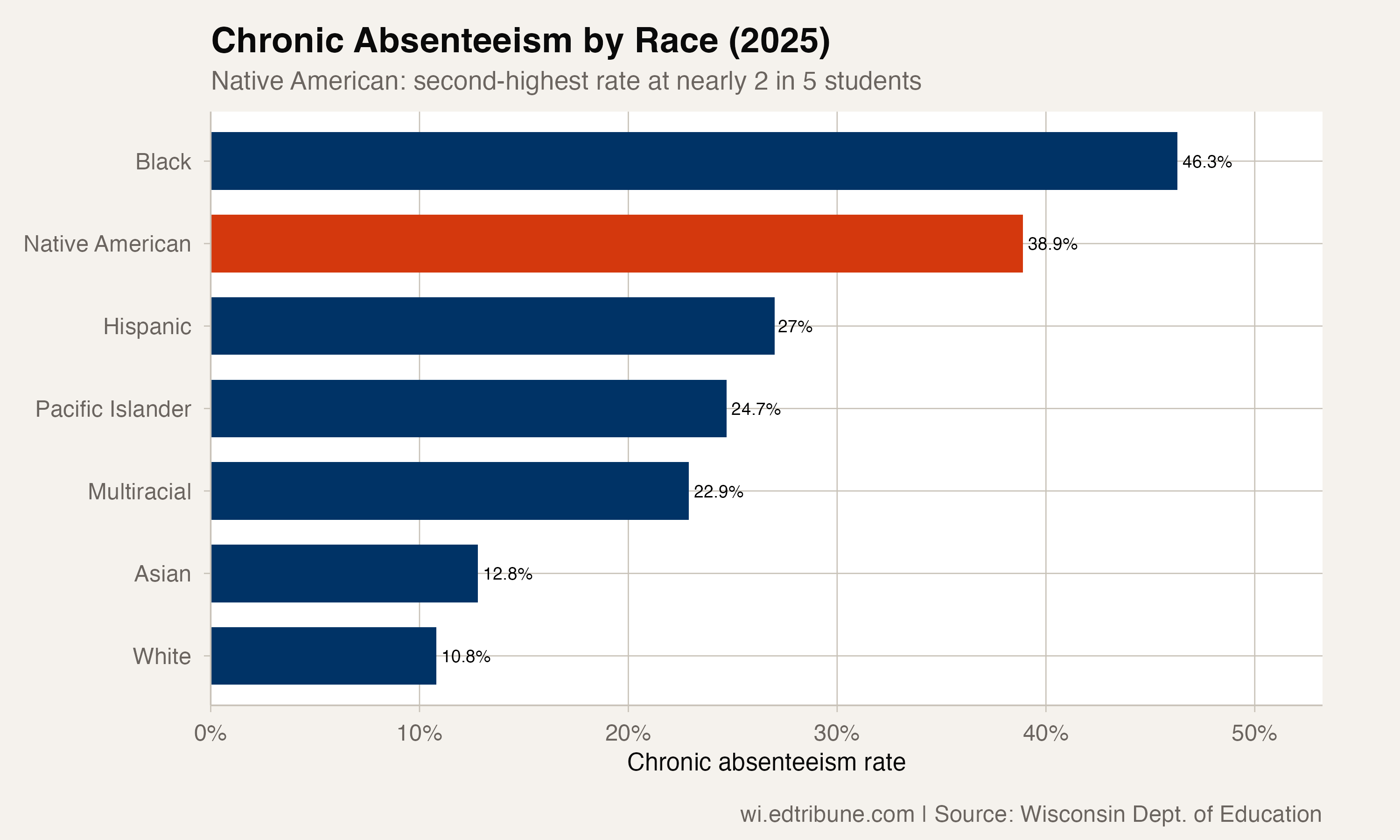
Among Wisconsin's seven racial categories, students who are Native American have the second-highest chronic absence rate, behind students who are Black at 46.3%. Both groups face rates more than double the rate for students who are white (10.8%).
Native American students make up roughly 1% of Wisconsin's total enrollment, which means their rates barely move statewide statistics. When the state reports its overall chronic-absenteeism count, the Native American share is small enough to disappear into the aggregate. But for the communities themselves (the Menominee Nation, the Ho-Chunk, the Ojibwe bands of northern Wisconsin), the rates point to barriers their schools have spent years trying to lower.
A Widening Gap
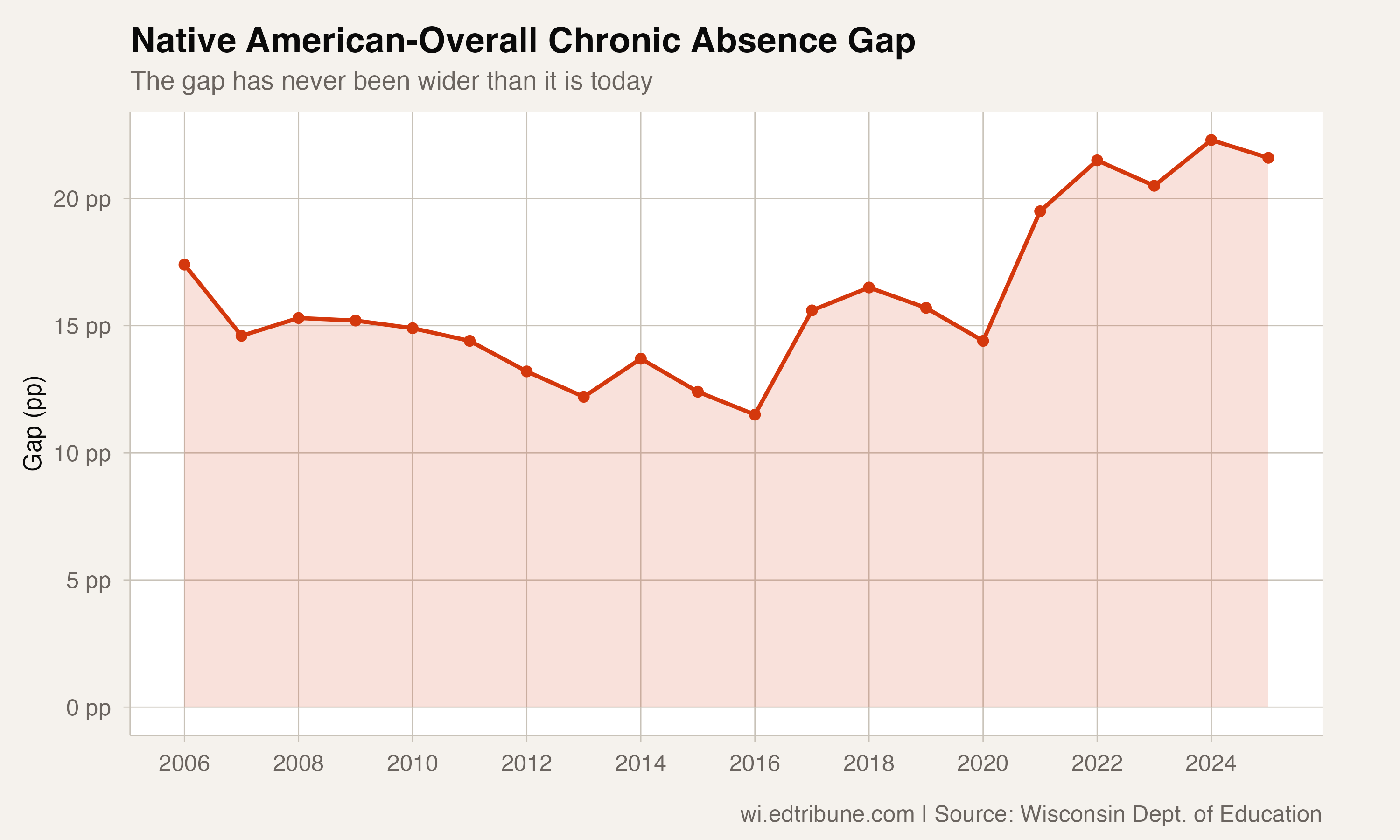
The 21.6-point gap between Native American students and the state average in 2025 is among the widest it has been in the 20-year dataset, just below the 22.3-point peak reached in 2024. Before 2017, the gap held in the 11-15 point range. It expanded during the pre-COVID drift upward, then opened further during the pandemic.
The pattern mirrors what happened for students who are Black: both groups experienced a proportionally larger increase during COVID, and both have recovered more slowly. Students who are white are within 2.6 points of their pre-pandemic rate; Native American students remain 10 or more points above theirs.
Wisconsin's tribal nations have been steadily building culturally responsive responses: integrating traditional knowledge into curricula, employing Native staff as family liaisons, and partnering with tribal social services. Districts including Menominee Indian and Lac du Flambeau have developed school-based wellness teams to bridge the gap between classroom attendance and family circumstances. Whether those approaches can offset the economic and geographical barriers to attendance in reservation communities is the central question facing Native education in the state.
For now, the work continues, and the data points to where the next investment is needed.
Detailed code that reproduces the analysis and figures in this article is available exclusively to EdTribune subscribers.
Discussion
Sign in to join the discussion.
Loading comments...