In this series: Wisconsin Chronic Absenteeism 2024-25.
Milwaukee↗ET Public Schools is Wisconsin's largest school district and its largest attendance problem. In the 2024-25 school year, 46.2% of Milwaukee's 61,367 students were chronically absent, meaning they missed more than 10% of school days.
That is 28,355 students. It is more than the entire enrollment of Kenosha, the state's third-largest district.
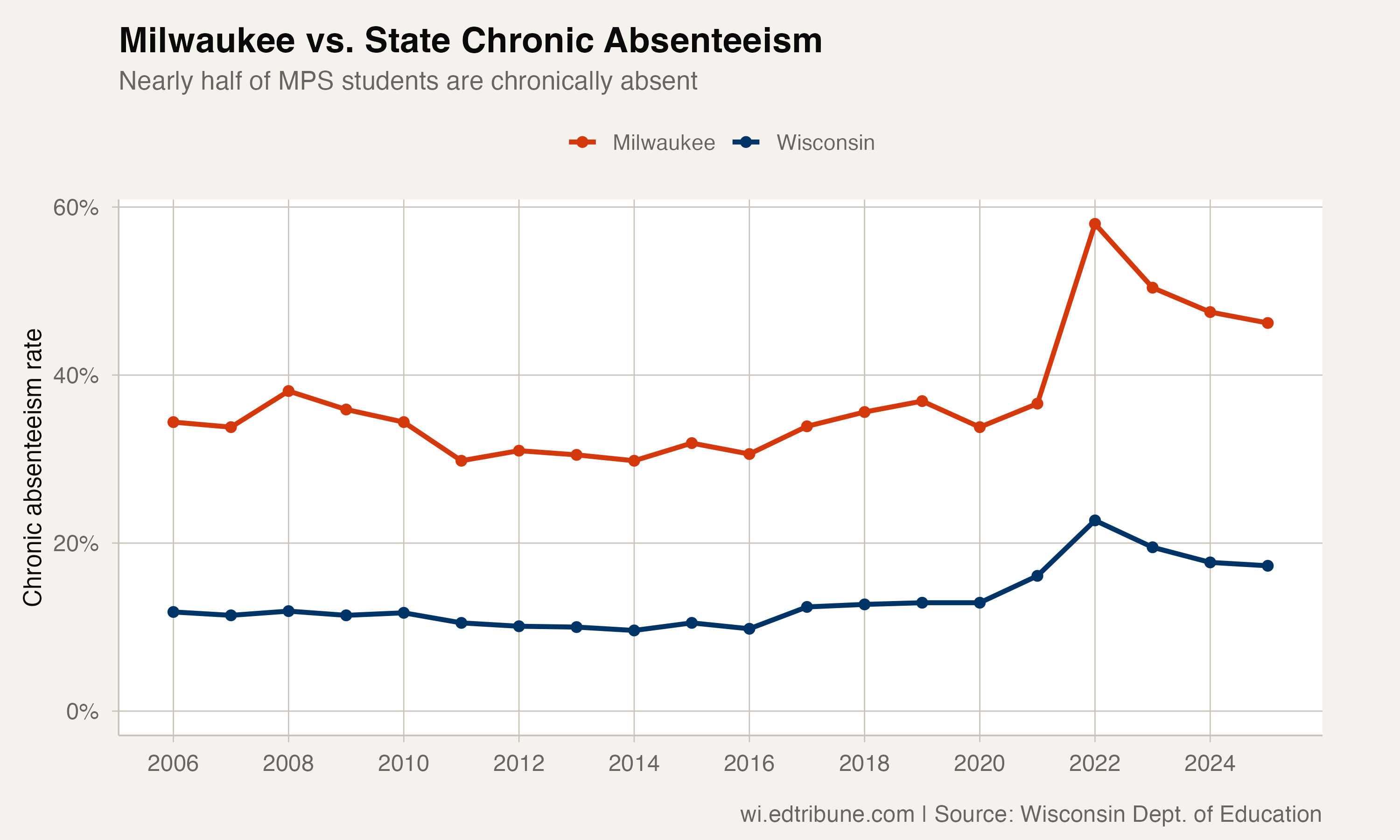
The gap between Milwaukee and the rest of Wisconsin has always existed, but the pandemic turned it into a chasm. In 2019, Milwaukee's chronic rate was 36.9% compared to the state's 12.9%, a 24-point gap. By 2022, Milwaukee hit 58% while the state peaked at 22.7%. Three years of recovery have brought both numbers down, but Milwaukee remains at 46.2% versus the state's 17.3%, a gap that has widened to nearly 29 points.
8% of Enrollment, 22% of Chronic Absence
The math of Milwaukee's crisis is stark. The district enrolls 8.2% of Wisconsin's students. But it accounts for 21.8% of all chronically absent students statewide.
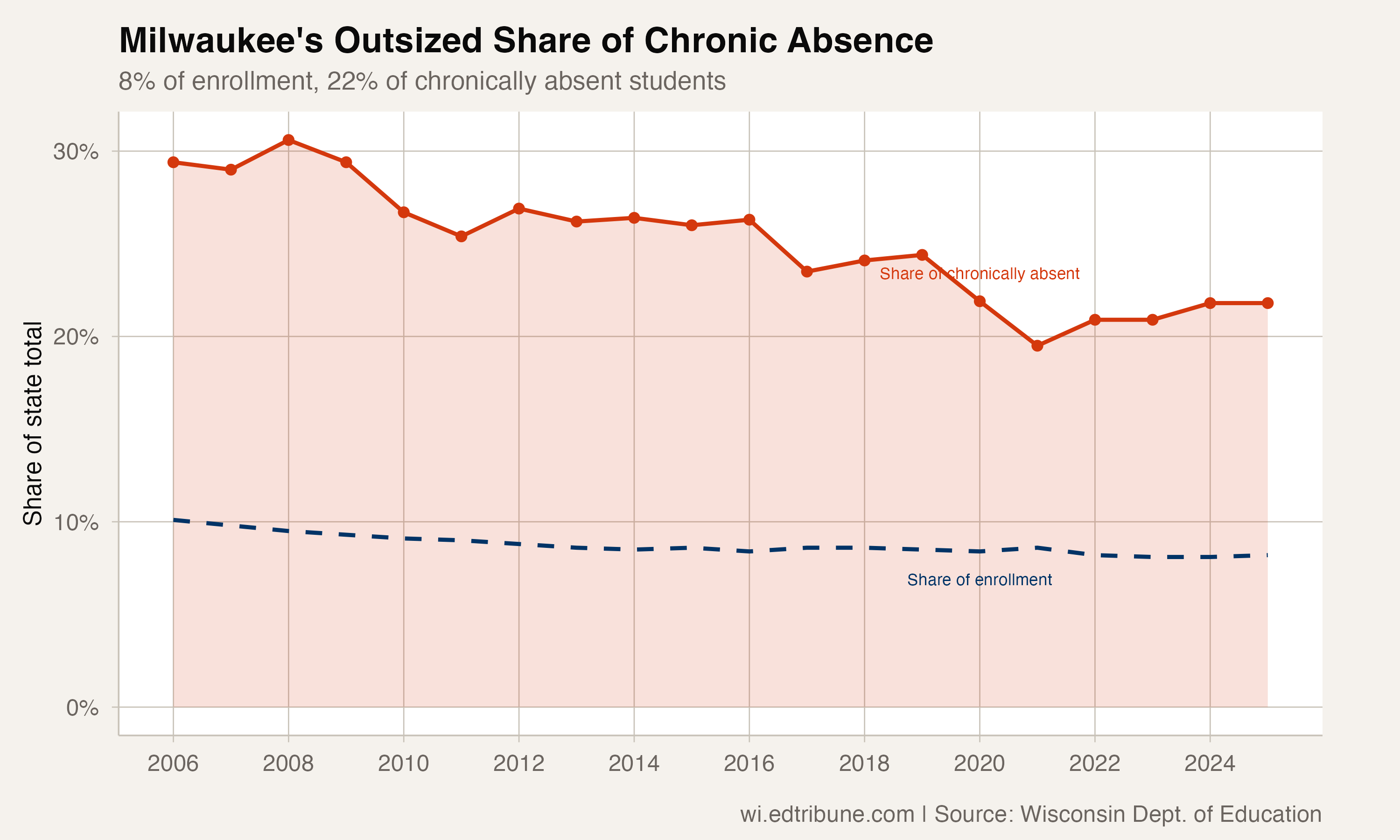
This means that any statewide strategy to reduce chronic absenteeism that does not move the needle in Milwaukee is, by definition, a strategy that cannot move the statewide number very far. If Milwaukee's 28,355 chronically absent students were a school district unto themselves, they would be the second-largest district in the state.
Within Milwaukee, the Disparities Compound
Milwaukee's 46.2% overall rate conceals even worse numbers for particular subgroups.
Black students face a 58.2% chronic absence rate, meaning three out of five Black students in Milwaukee miss more than 10% of school days. Hispanic students are at 41.4%. White students in MPS are at a lower rate, though still far above the state average for white students overall (10.8%).
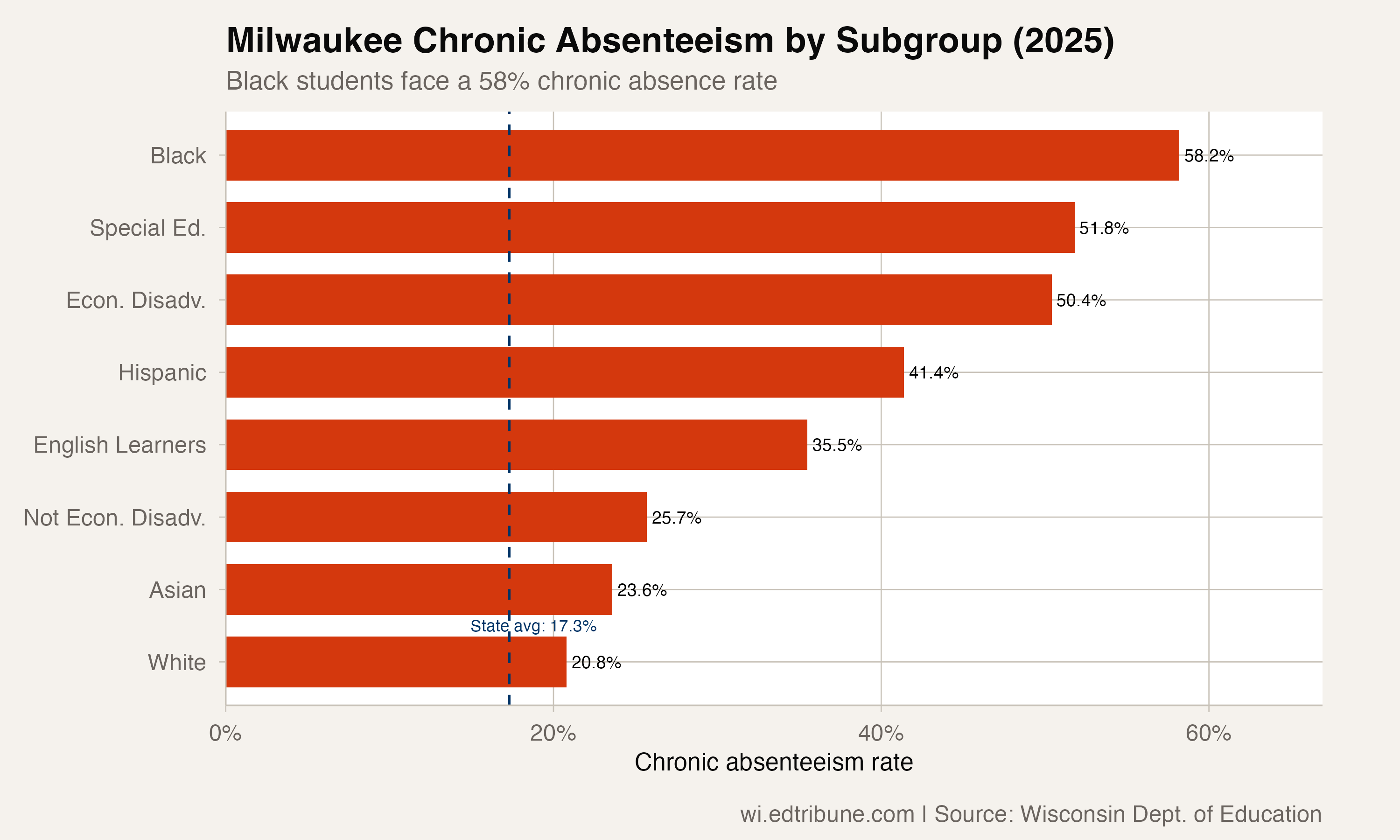
Economically disadvantaged students in Milwaukee have a chronic rate above 50%, while English learners also experience elevated absence. The overlay of race, poverty, and language barriers creates compounding disadvantages for students in the district.
Slow Progress from a Devastating Peak
Milwaukee's numbers have improved. The 58% peak in 2022 was a genuinely catastrophic figure, three out of five students missing too much school. The decline to 46.2% represents progress, and the district has shown year-over-year improvement in each of the last three years.
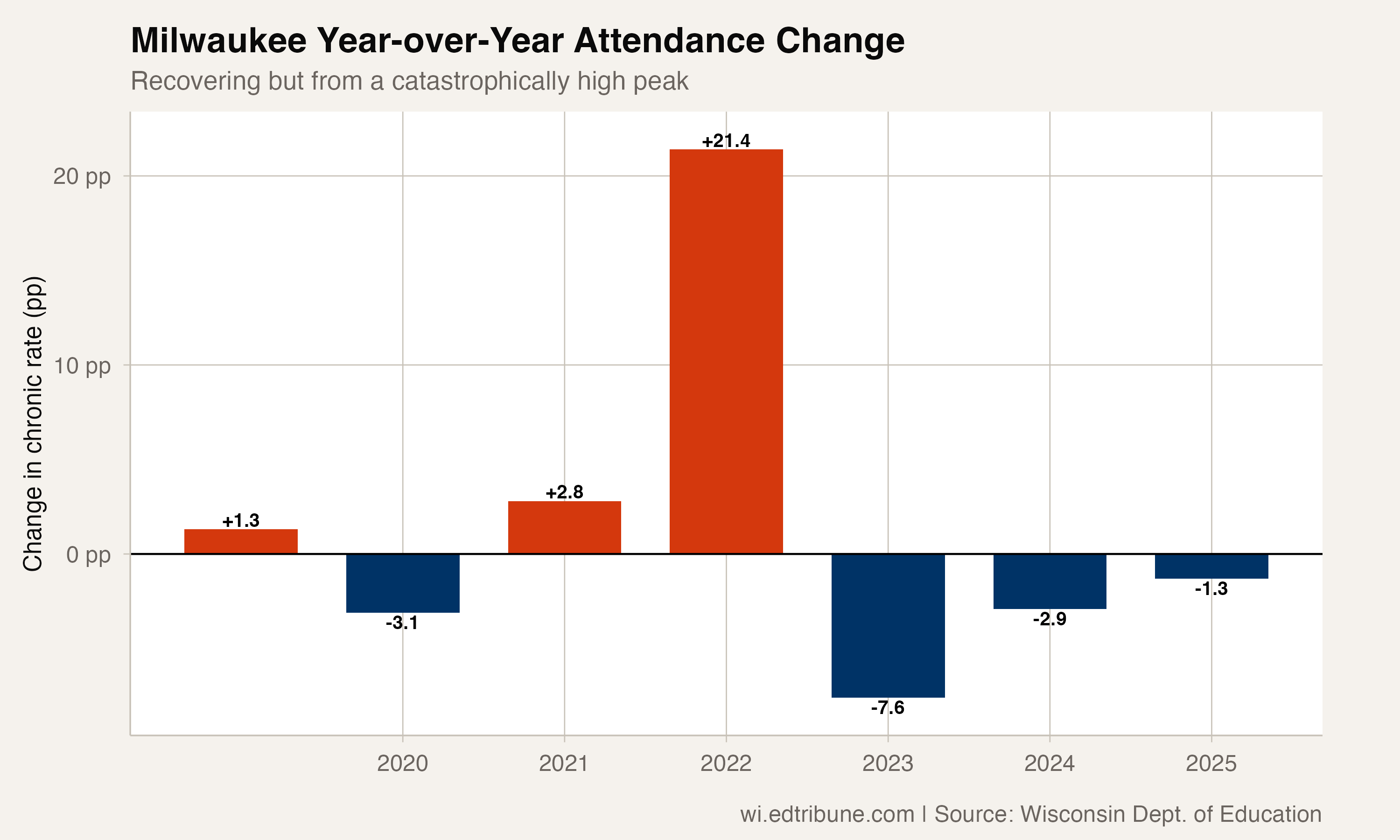
But like the state as a whole, Milwaukee's improvement is decelerating. The district faces headwinds that extend far beyond the attendance office. MPS superintendent Keith Posley's successor, Dr. Keith Cassellius, has spoken about closing or merging "much more than 5" schools to address a $100 million structural budget deficit. Consolidating schools, even when necessary, can worsen attendance by increasing travel distances and disrupting the social connections that keep students engaged.
The graduation rate provides a small counterpoint: MPS reached 72% in 2025, its highest in 16 years. Students who do show up appear to be completing school at higher rates. But that progress is threatened by a district where nearly half the student body is missing significant instructional time.
The Concentration Effect
Milwaukee is not the only Wisconsin district with high chronic absenteeism. Madison Metropolitan sits at 29.6%, Racine Unified at 36.5%, Beloit at 42.7%. But Milwaukee's sheer size, more chronically absent students than the next four highest-absence districts combined, makes it the center of gravity for Wisconsin's attendance challenge.
The state's five largest contributors to chronic absence (Milwaukee, Madison, Racine, Kenosha, and Green Bay) together account for 38% of all chronically absent students while enrolling roughly 18% of the state's students. Targeted investment in these five districts could move the state number significantly. Without progress in Milwaukee, Wisconsin's overall rate cannot return to anything close to pre-pandemic levels.
Detailed code that reproduces the analysis and figures in this article is available exclusively to EdTribune subscribers.
Discussion
Sign in to join the discussion.
Loading comments...