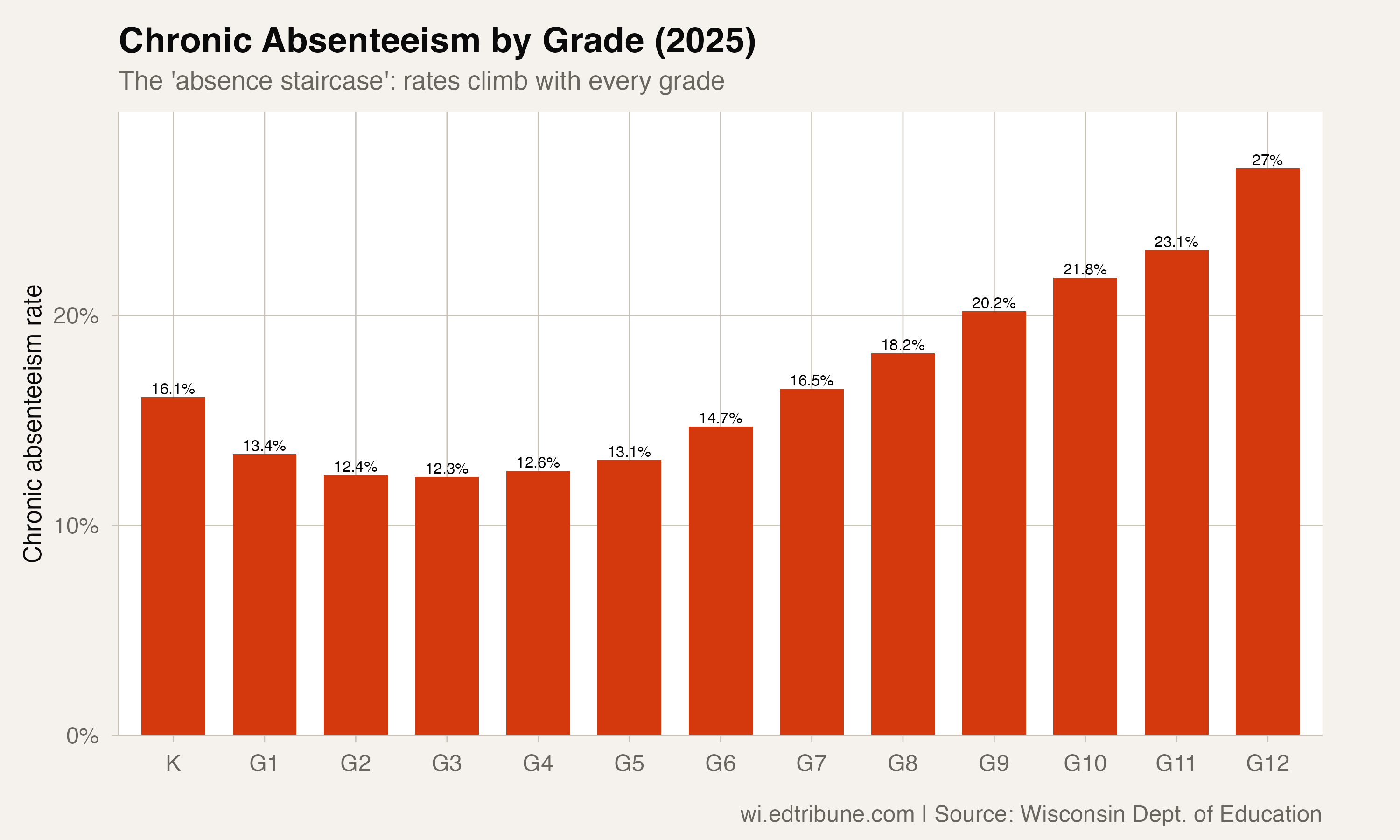
Wisconsin's chronic absenteeism data contains a staircase. It starts in third grade, at 12.3%, and climbs with almost mathematical precision through every subsequent grade until it reaches 27.0% in 12th grade.
More than one in four Wisconsin seniors missed more than 10% of school days in 2024-25. That is 17,014 students (approaching the enrollment of an entire medium-sized school district) who effectively checked out of regular attendance during their final year of high school.
The Staircase
The grade-by-grade data reveals a near-perfect escalation. Elementary grades (K through 5) average 13.3% chronic absenteeism. Middle school grades (6 through 8) run slightly higher. High school grades average 23.0%, a 10-point structural gap between the youngest and oldest students.
But the data also reveals an outlier at the bottom of the staircase: kindergarten. At 16.1%, kindergarten has a higher chronic rate than grades 1 through 6, functioning as an early-warning signal that parents of the youngest students may view daily attendance as less mandatory.
The Senior Cliff
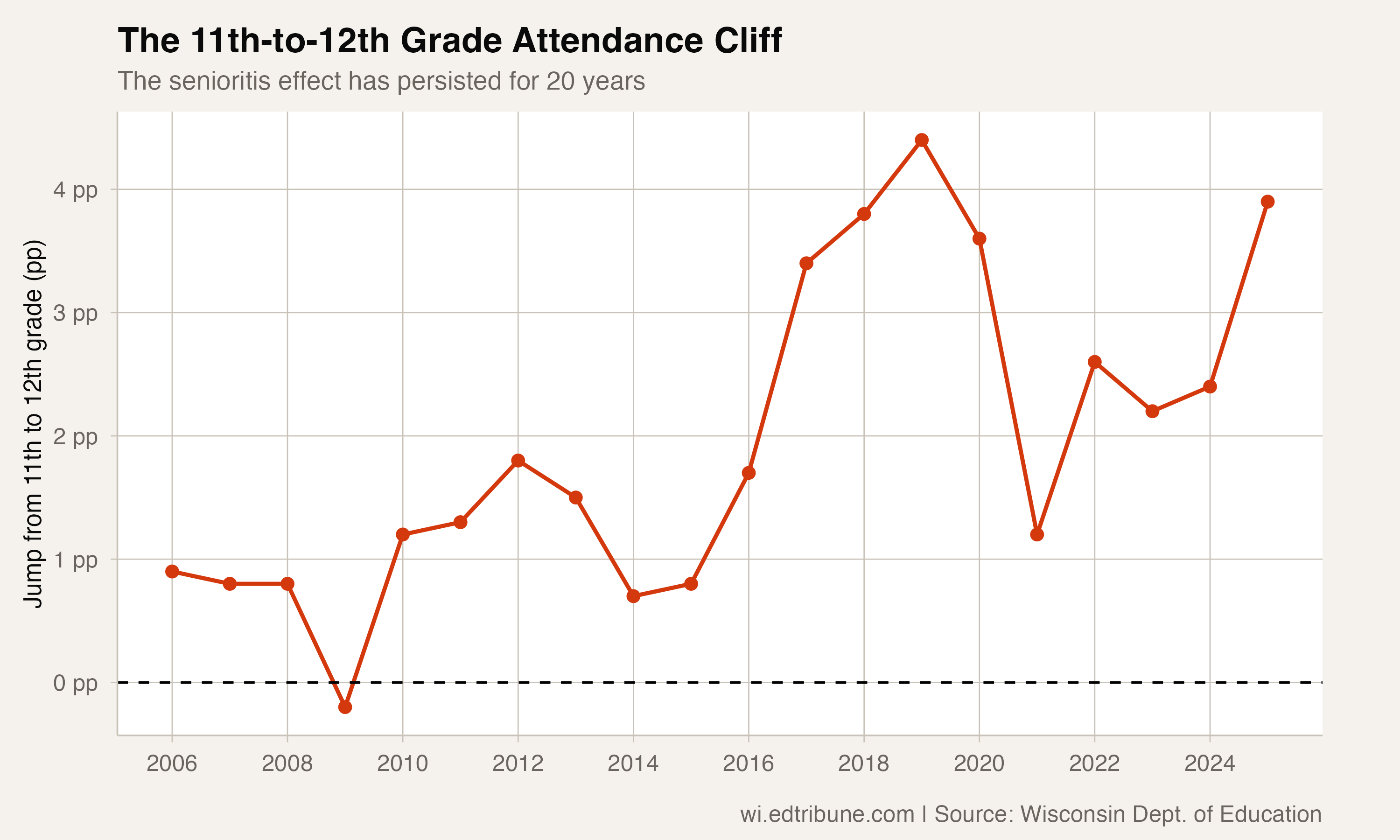
The sharpest single-grade jump occurs between 11th and 12th grade, a 3.9-point increase that dwarfs any other grade transition. This is the "senioritis effect" rendered in data: students who have enough credits to graduate, who may have jobs or family obligations competing for their time, and who perceive diminishing returns from attending their final months of high school.
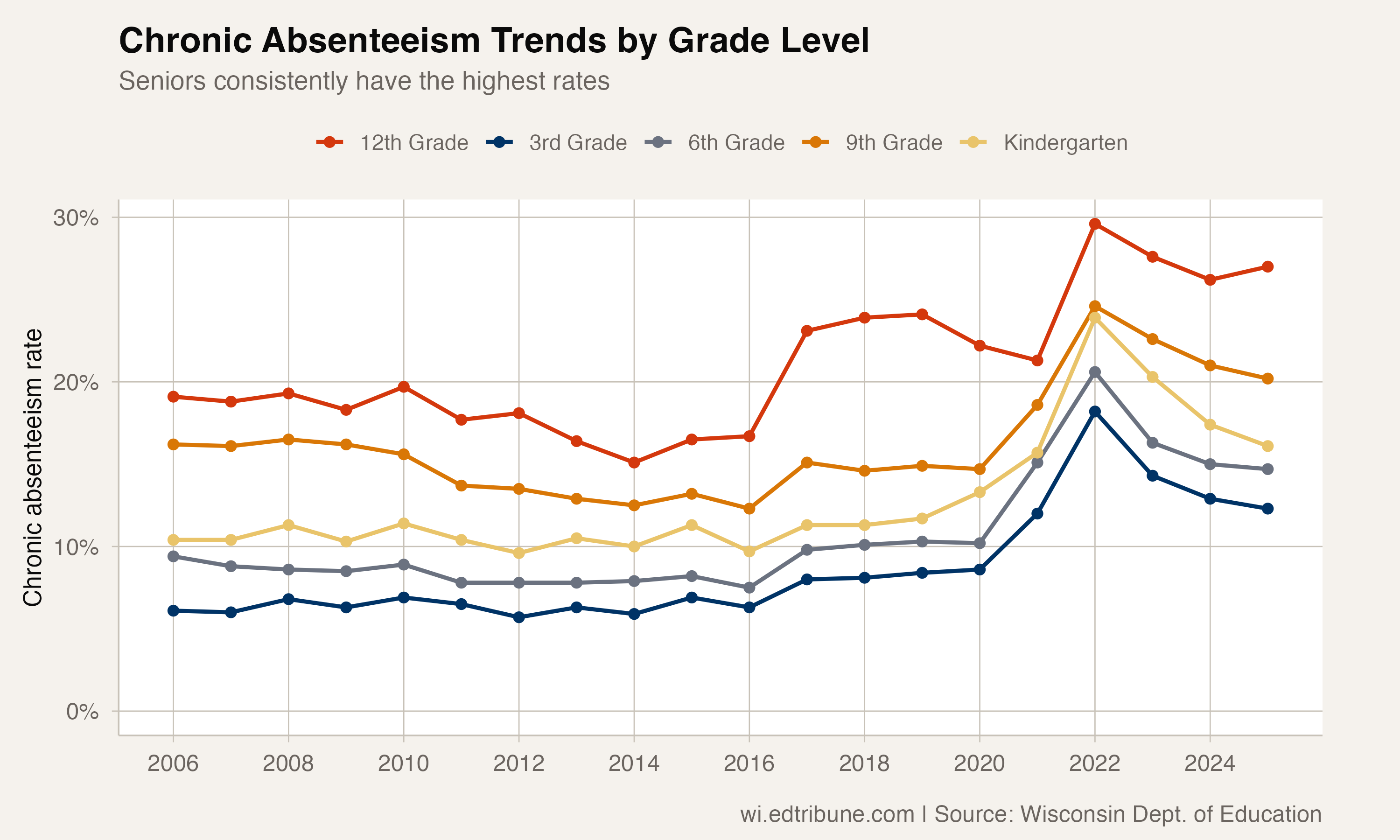
The senior-year absence pattern is not new. 12th grade has had the highest chronic rate in every year of the 20-year dataset. But the post-COVID amplification has been dramatic. In 2019, the 12th-grade rate was 19.4%. By 2022, it reached 34.7%. The current 27.0% represents recovery from the peak but remains nearly 8 points above pre-pandemic levels.
The Kindergarten Question
The kindergarten outlier deserves separate attention. At 16.1%, kindergarten chronic absence is higher than every grade from 1st through 6th. This pattern predates COVID and has been consistent across the dataset, suggesting a cultural norm among some families that kindergarten attendance is less important than attendance in later grades.
Research from Attendance Works and other organizations has consistently shown that chronic absence in kindergarten is one of the strongest predictors of third-grade reading failure and long-term academic disengagement. With 8,228 kindergartners chronically absent in Wisconsin, the state may be setting up a pipeline of future attendance problems.
Elementary vs. High School: Two Different Problems
The 10-point gap between elementary and high school chronic rates suggests that Wisconsin faces two distinct attendance challenges requiring different interventions.
Elementary absence is driven primarily by family circumstances: parental decisions about when to keep children home, health concerns, transportation logistics, and childcare disruptions. These are problems that family engagement specialists and school nurses can address.
High school absence is increasingly driven by student agency: decisions made by teenagers who may be working, caring for siblings, struggling with mental health, or simply disengaged from a system that feels irrelevant to their futures. The legislature's truancy bill package, which includes grade retention for 30 or more unexcused absences, targets this population, though whether punitive measures reduce absence or simply push disengaged students out of the system entirely is debated.
The staircase has been in the data for 20 years. COVID amplified it, but the structural forces pulling older students away from school were there long before March 2020.
Detailed code that reproduces the analysis and figures in this article is available exclusively to EdTribune subscribers.
Discussion
Sign in to join the discussion.
Loading comments...