Demographics
English Learners Saw the Steepest Attendance Decline of Any Subgroup
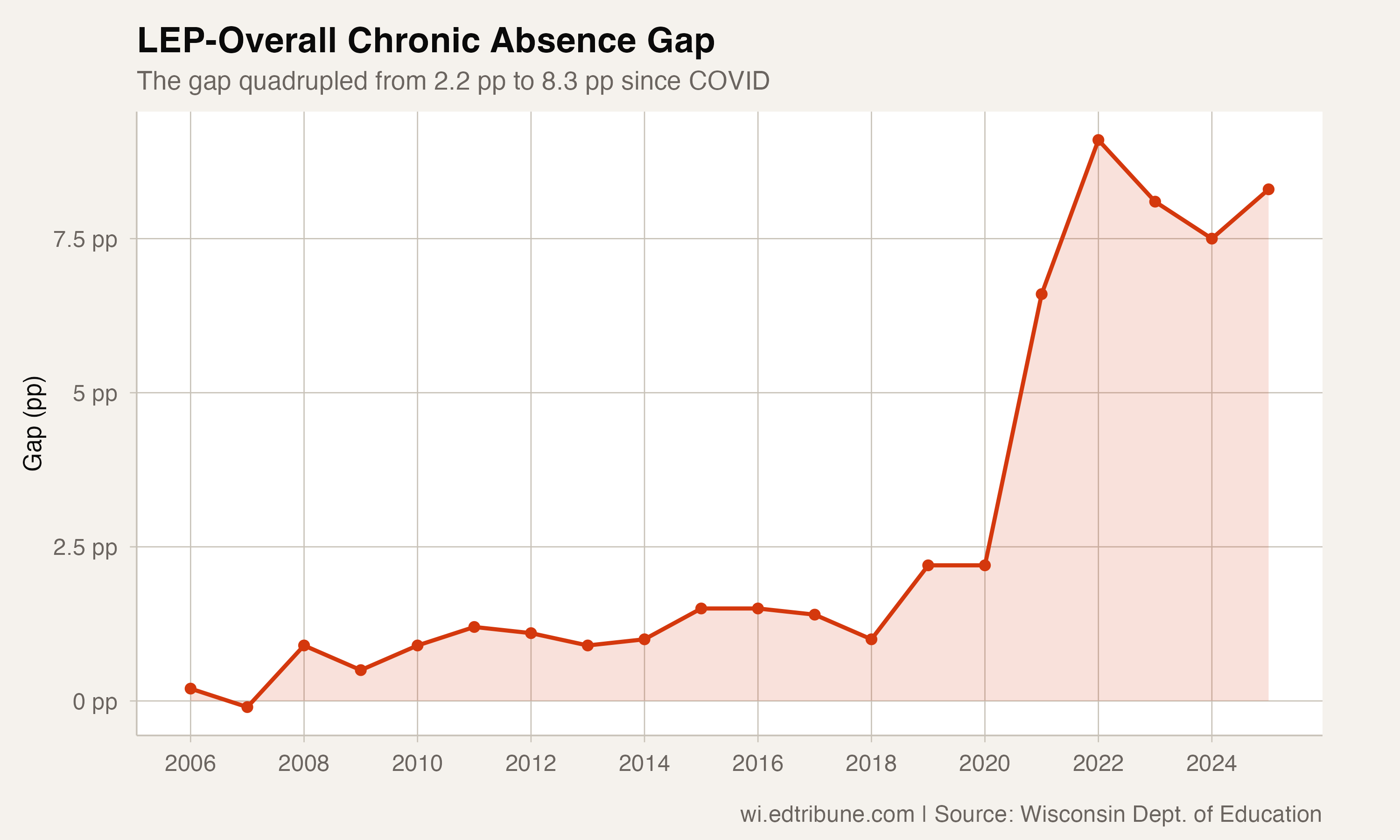
LEP students in Wisconsin went from 15.1% chronic absence in 2019 to 25.6% in 2025, the largest excess of any subgroup, with the LEP-overall gap quadrupling.
Badger State Education Coverage, Driven by Data
Education News & Data
Local education reporting from every corner of Wisconsin, grounded in Wisconsin Department of Education data.
Elmbrook enrolls 7,452 students and reported a 3.1% chronic absenteeism rate in 2025, more than 14 points below the state average and two points below its own pre-pandemic level.
CESA 2 gained 5,793 students from 2006 to 2025, but five consecutive annual declines have changed the region's planning questions.
All six racial chronic absenteeism gaps versus white students widened between 2019 and 2025 in Wisconsin, led by Native American and Pacific Islander students.
Wisconsin reported 50,990 kindergarten students and 67,049 grade-12 students in 2025, a cross-sectional ratio of 76.0 per 100.
LEP students in Wisconsin went from 15.1% chronic absence in 2019 to 25.6% in 2025, the largest excess of any subgroup, with the LEP-overall gap quadrupling.
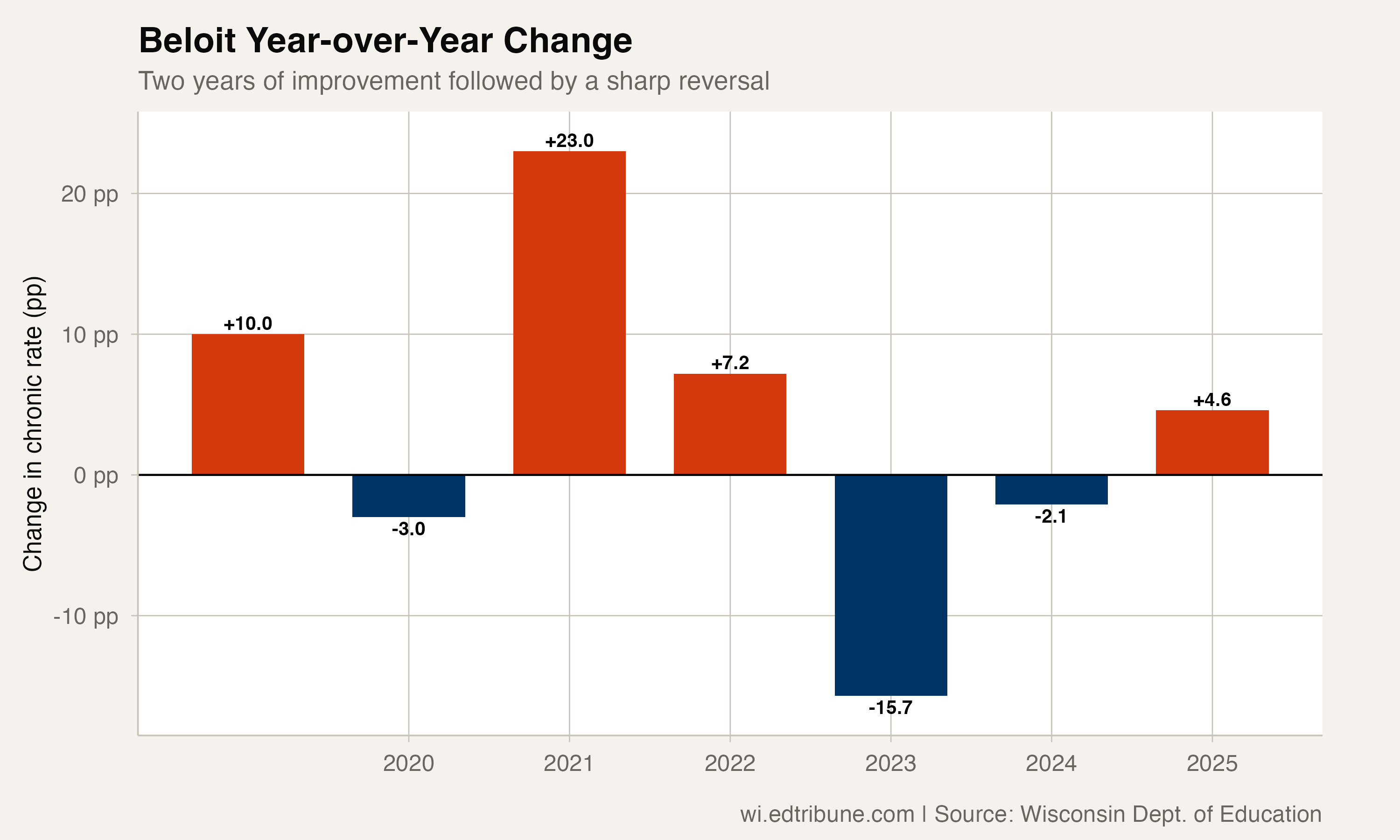
After two years of improvement, Beloit's chronic absenteeism jumped 4.6 points to 42.7% in 2025 while the state continued recovering.
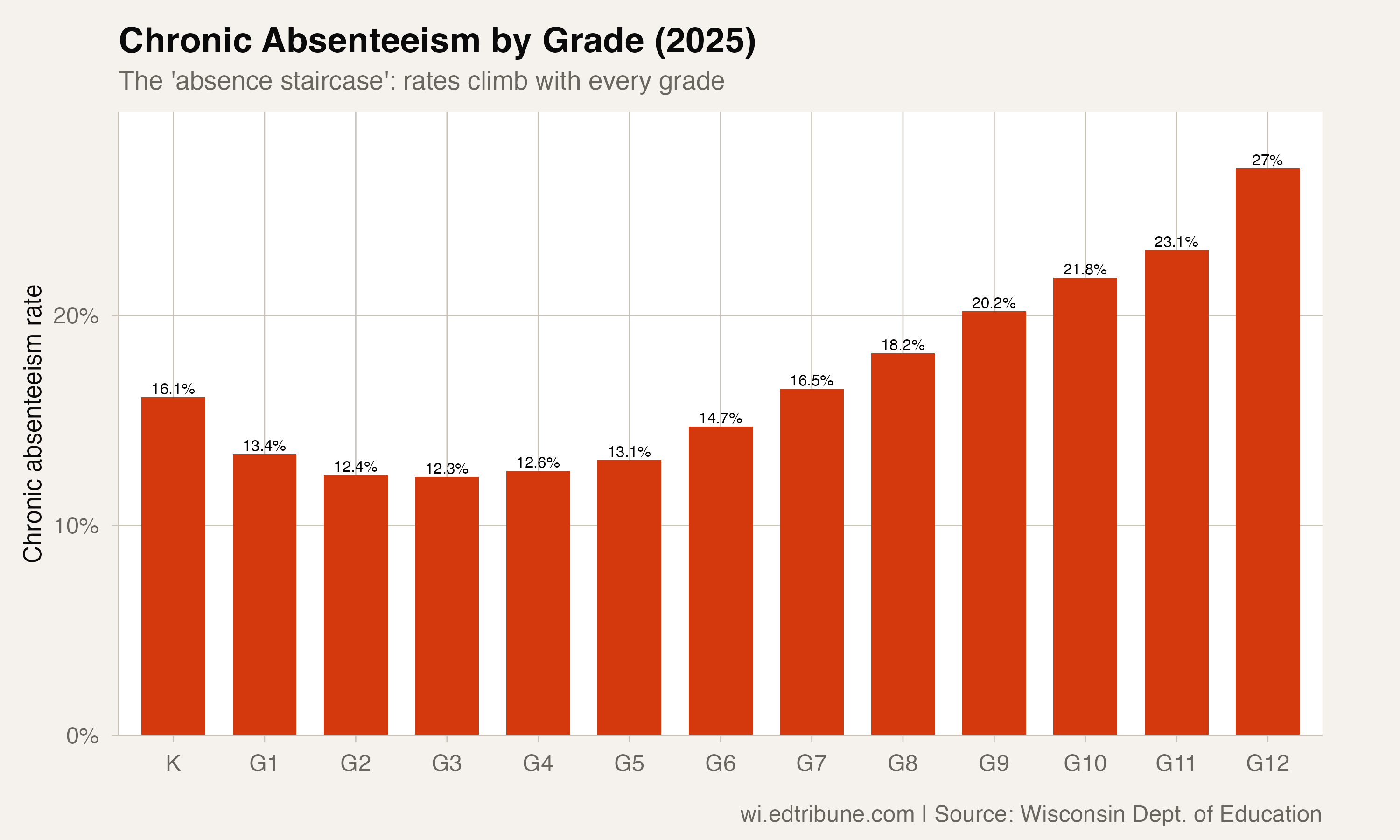
Wisconsin's chronic absenteeism climbs steadily from 3rd grade through 12th, with 27% of seniors (17,014 students) chronically absent in 2025.
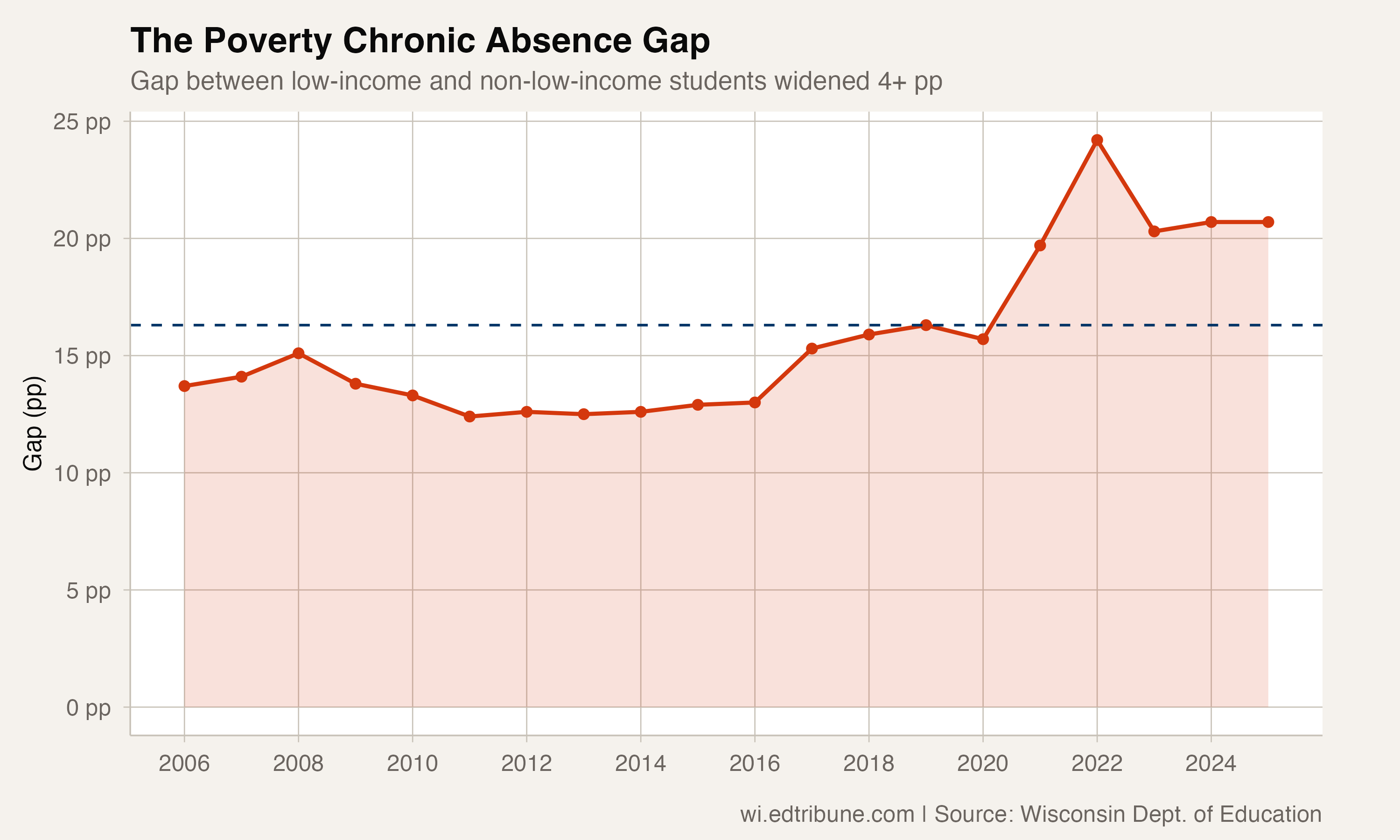
Wisconsin's chronic absenteeism gap by income widened from 16.3 to 20.7 points since 2019, with nearly 1 in 3 lower-income students now chronically absent.
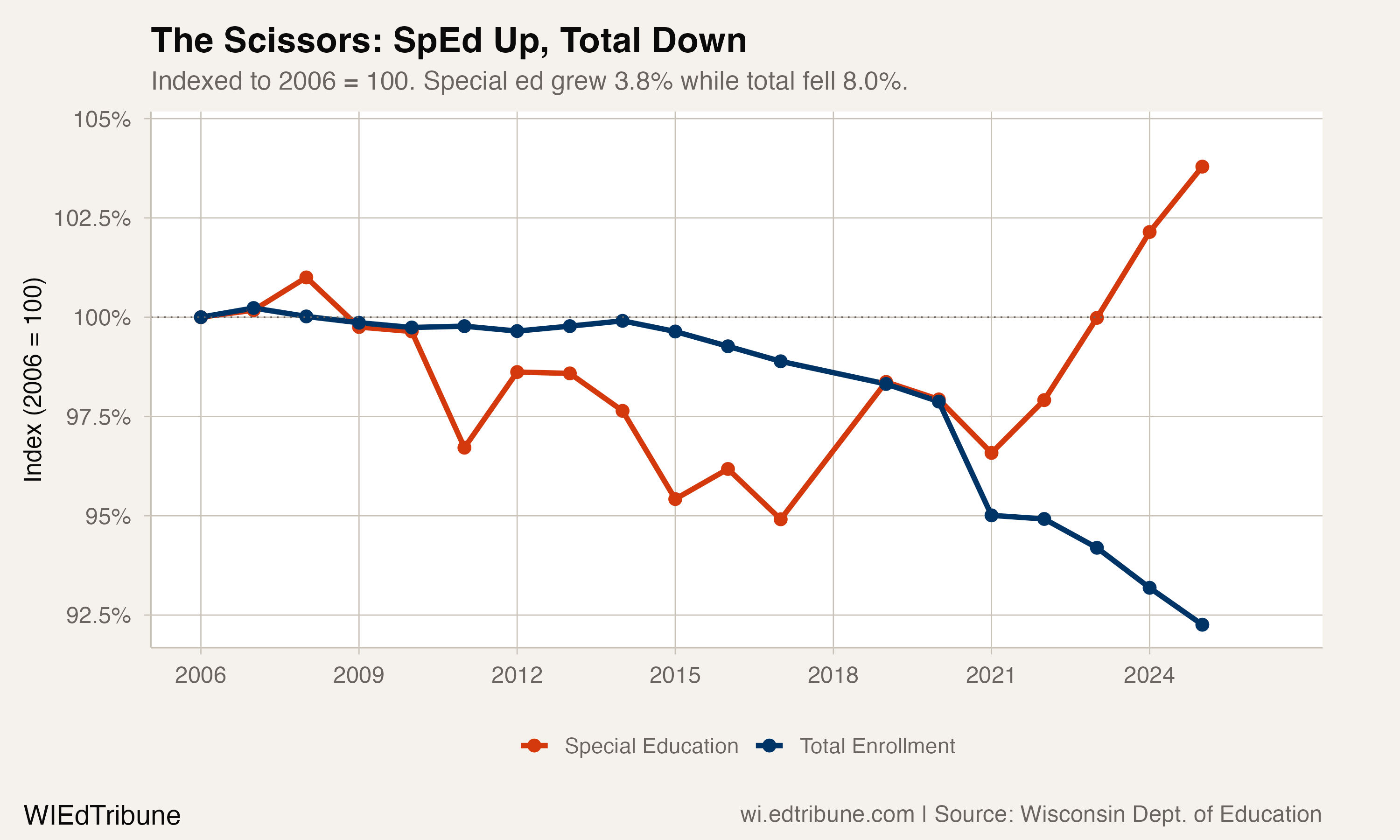
Wisconsin's special education share hit 14.7% in 2025, crossing the 1-in-7 threshold at an all-time high even as total enrollment fell.
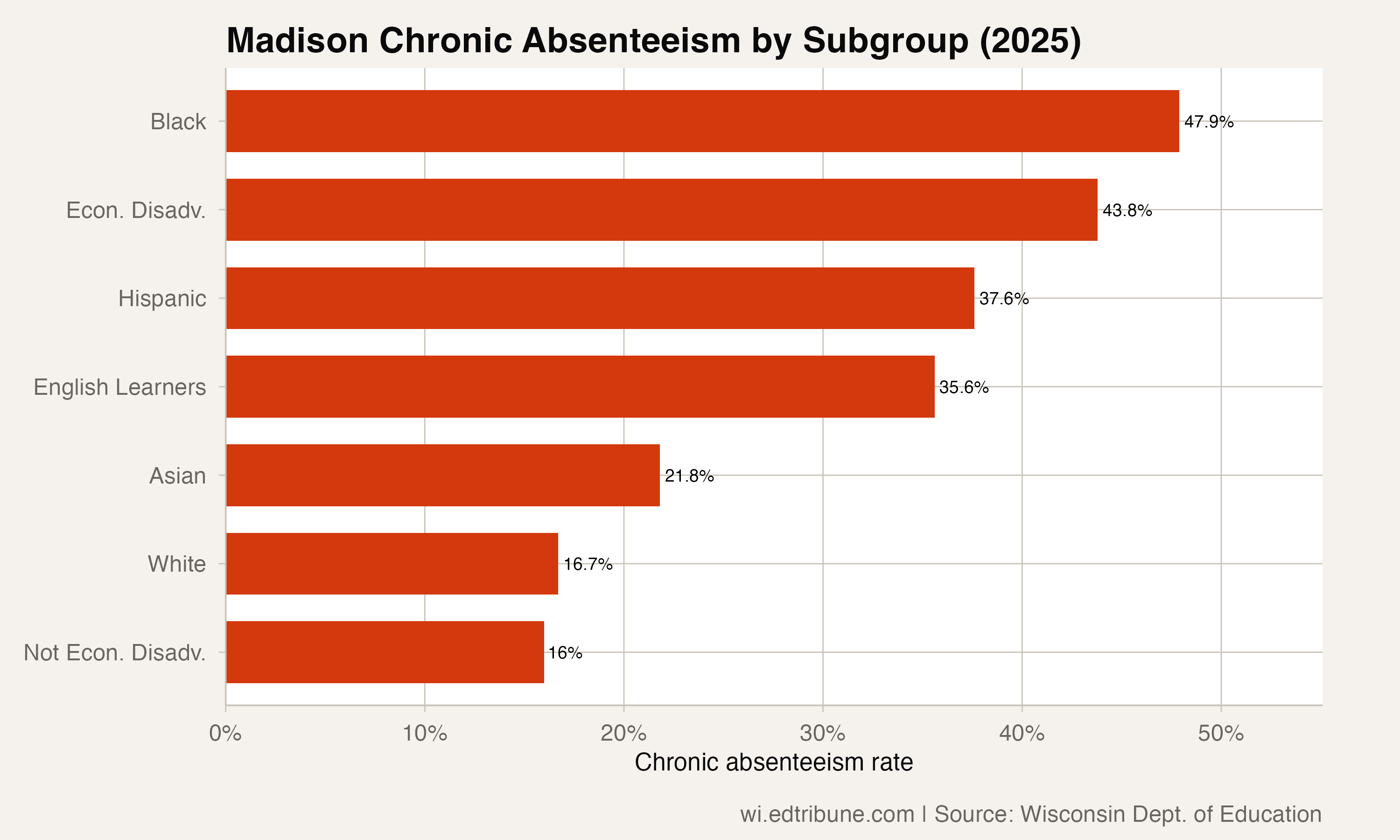
Madison Metropolitan's chronic rate went from 7.1% in 2011 to 29.6% in 2025, a tripling that began before COVID and shows no sign of returning to baseline.
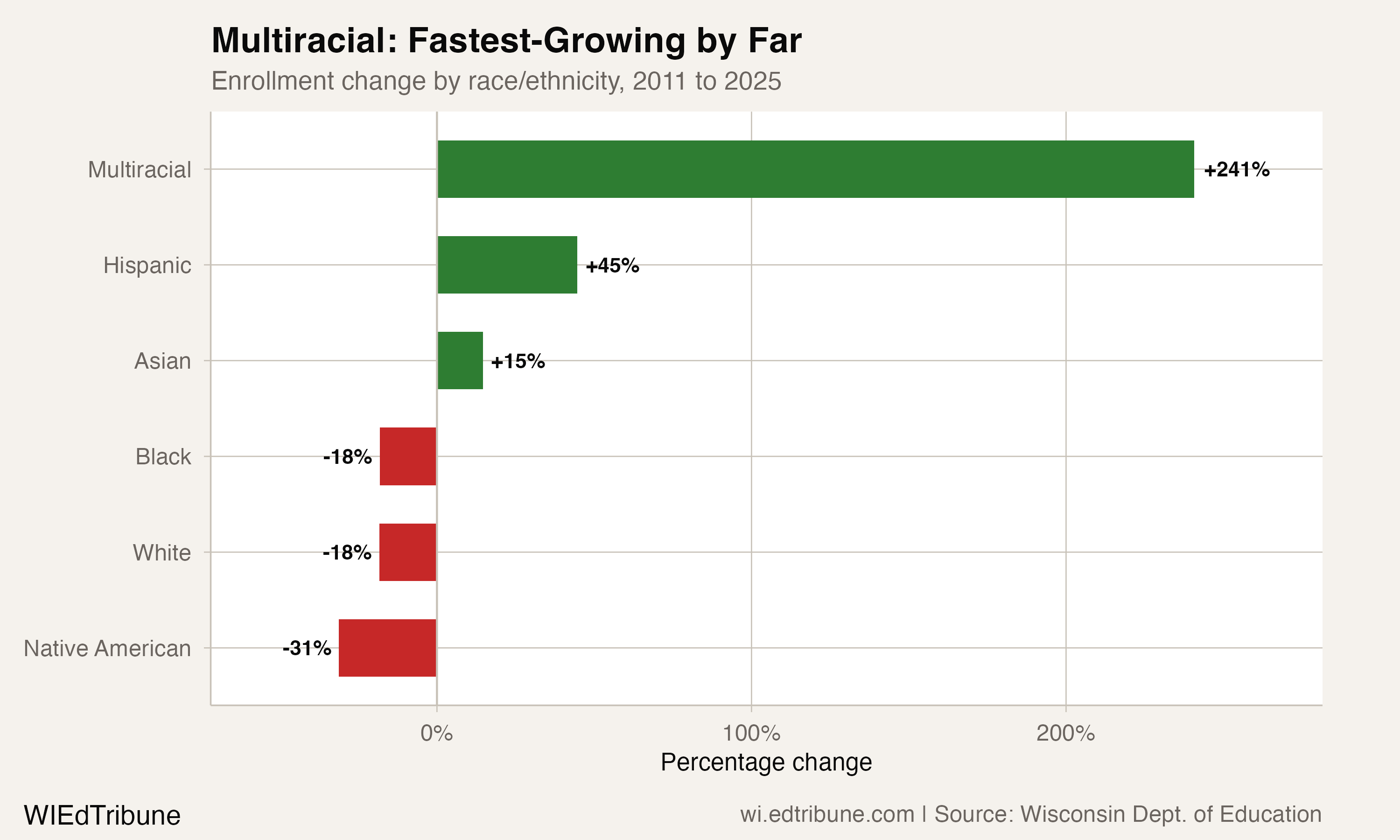
Multiracial enrollment tripled from 13,197 to 44,968 in 14 years, making it Wisconsin's fastest-growing demographic by a wide margin.
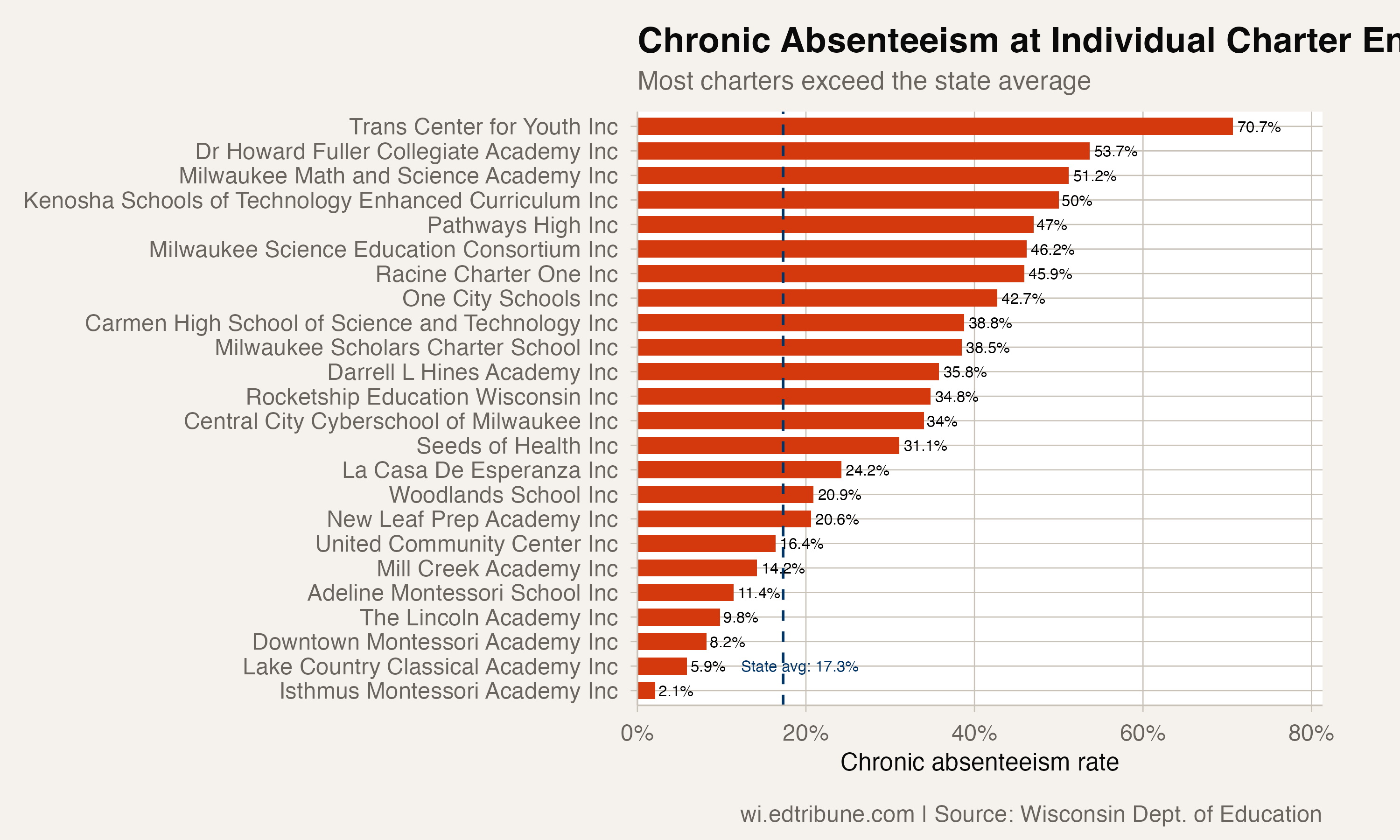
Charter schools in Wisconsin have a weighted chronic absenteeism rate of 30.6% versus 16.9% for traditional districts, a gap that nearly doubled since 2019.
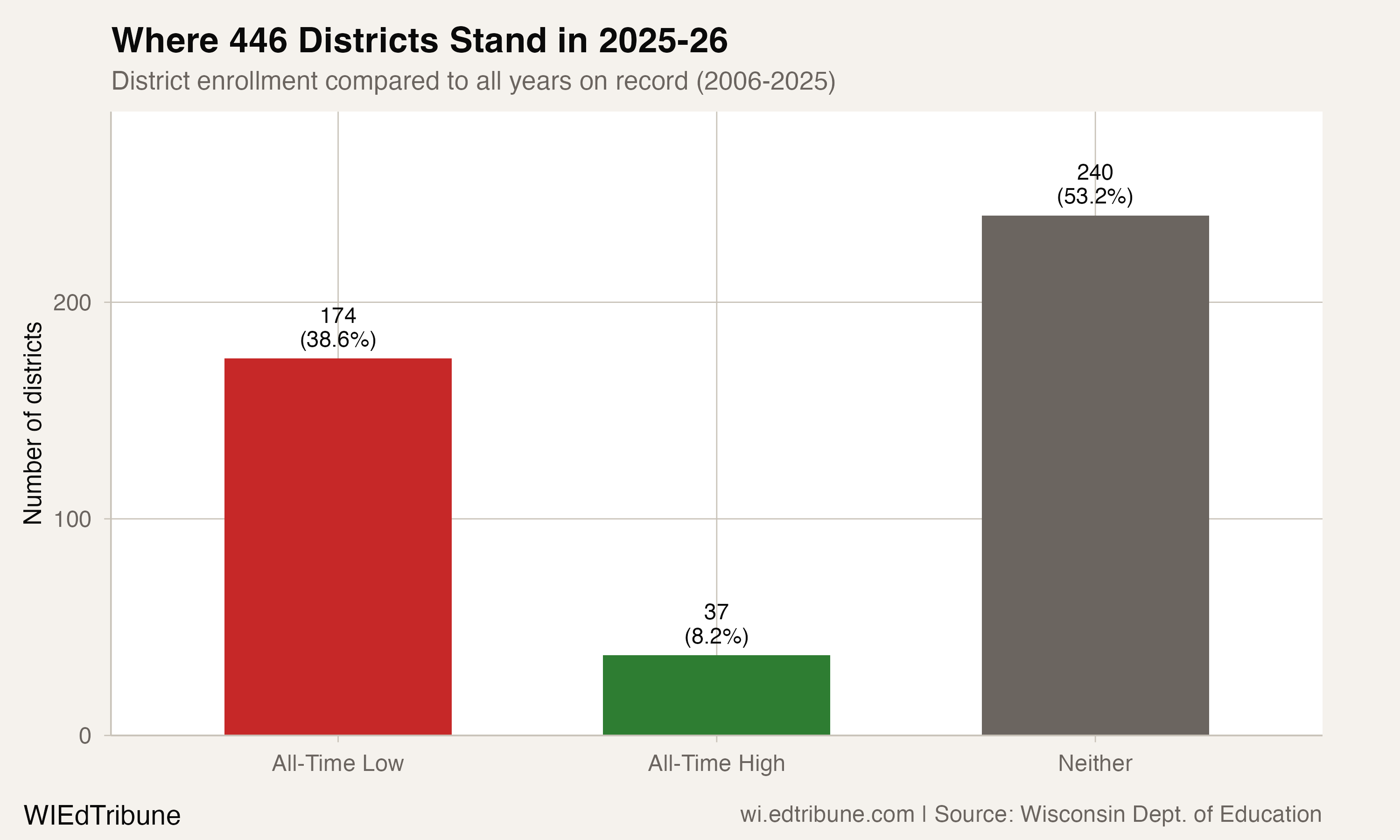
174 of 446 Wisconsin school districts recorded their lowest enrollment ever in 2025-26, including nine of the state's 10 largest.
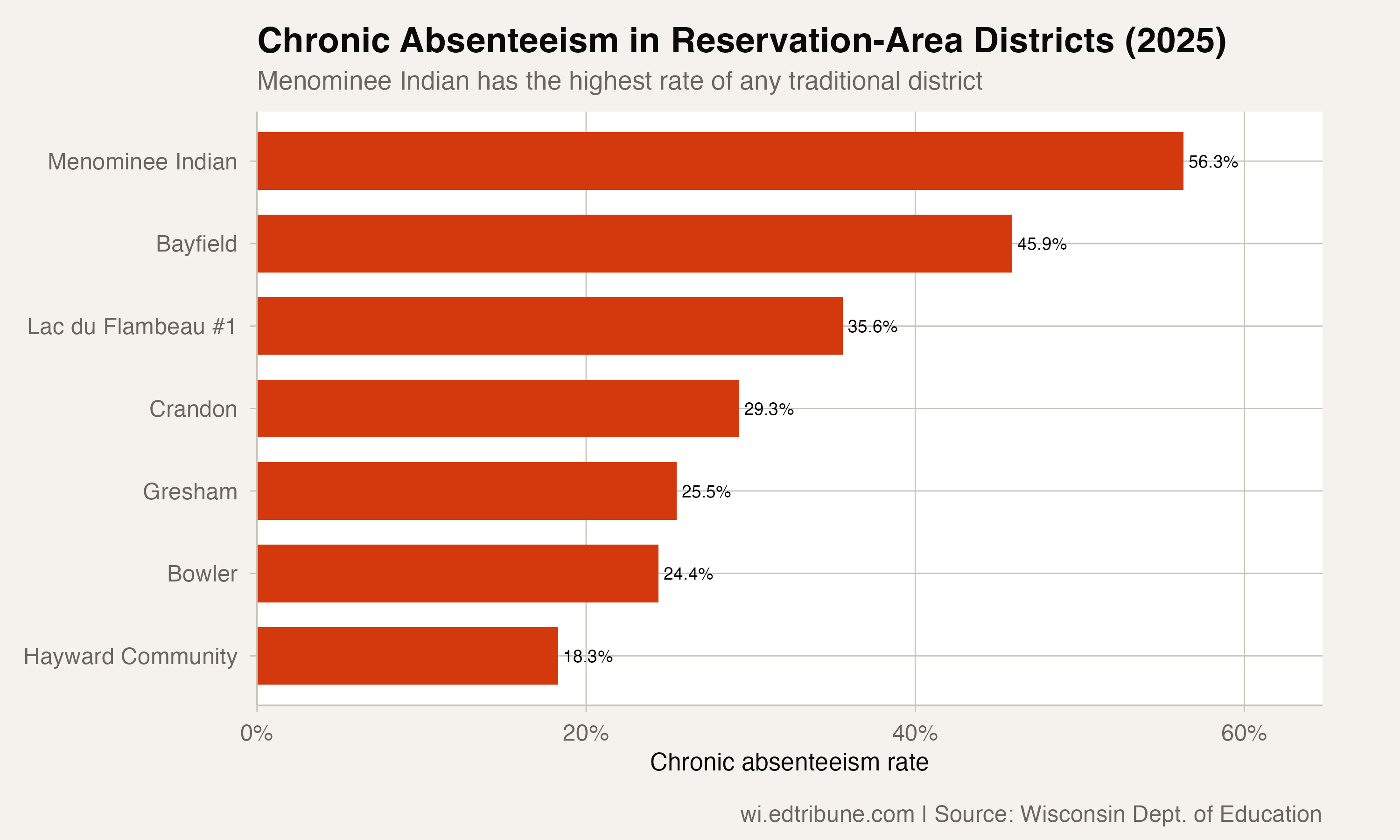
Native American students in Wisconsin show a 38.9% chronic absence rate against a state average of 17.3%, with tribal nations leading culturally responsive responses.
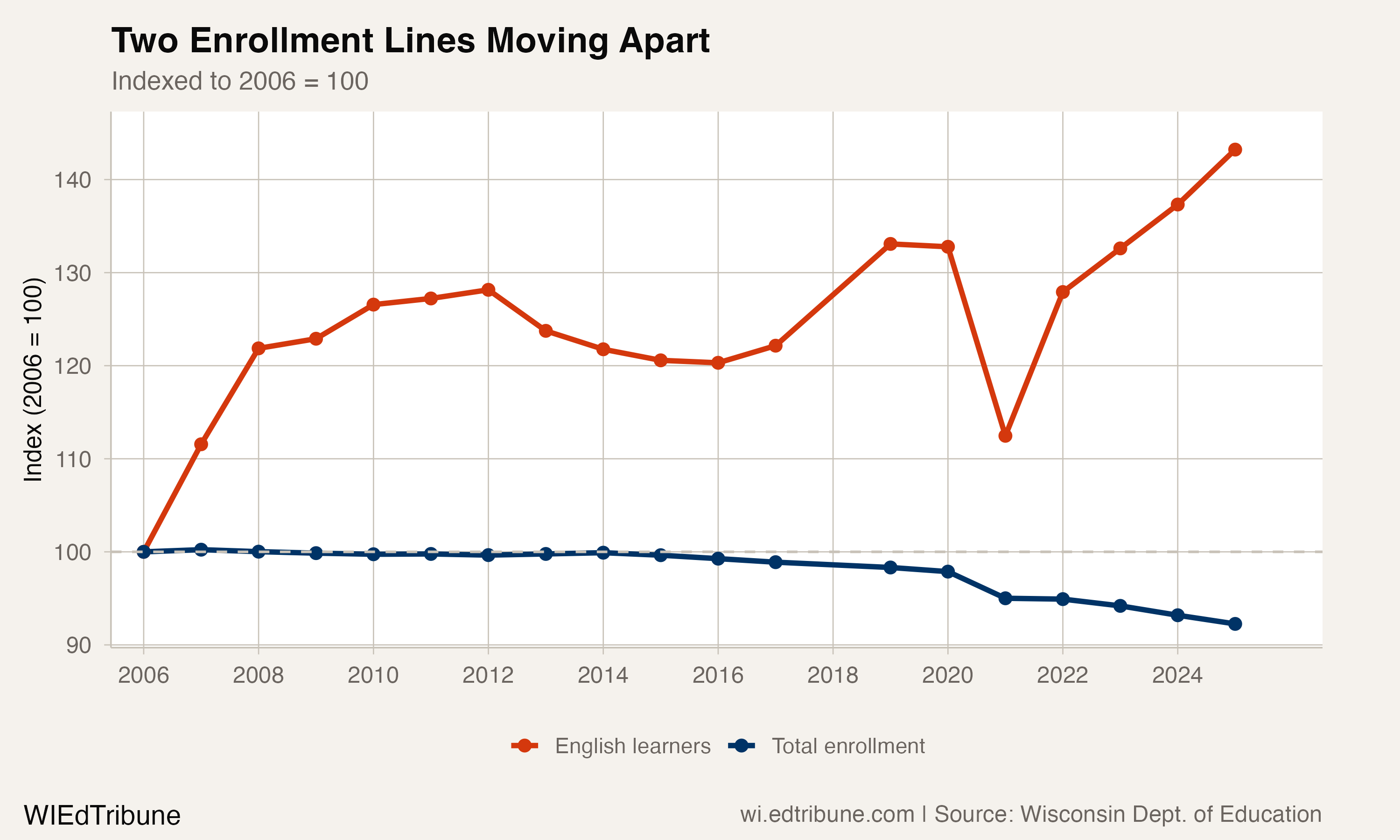
Wisconsin's English learner population grew 43% to 55,772 while total enrollment fell 8%, reshaping staffing and funding demands across 384 districts.